

Liquids, powders, orally disintegrating tablets, and chewable tablets are designed for patients who have difficulty swallowing tablets and capsules. Unfortunately, with ease of administration comes the challenge of palatability.
This is where we come in. Senopsys is dedicated to helping our clients develop palatable drug products – it’s all we do.
By integrating advanced taste masking strategies into formulation design, we help address one of the most common challenges in pediatric drug development—creating medicines that children will willingly take.
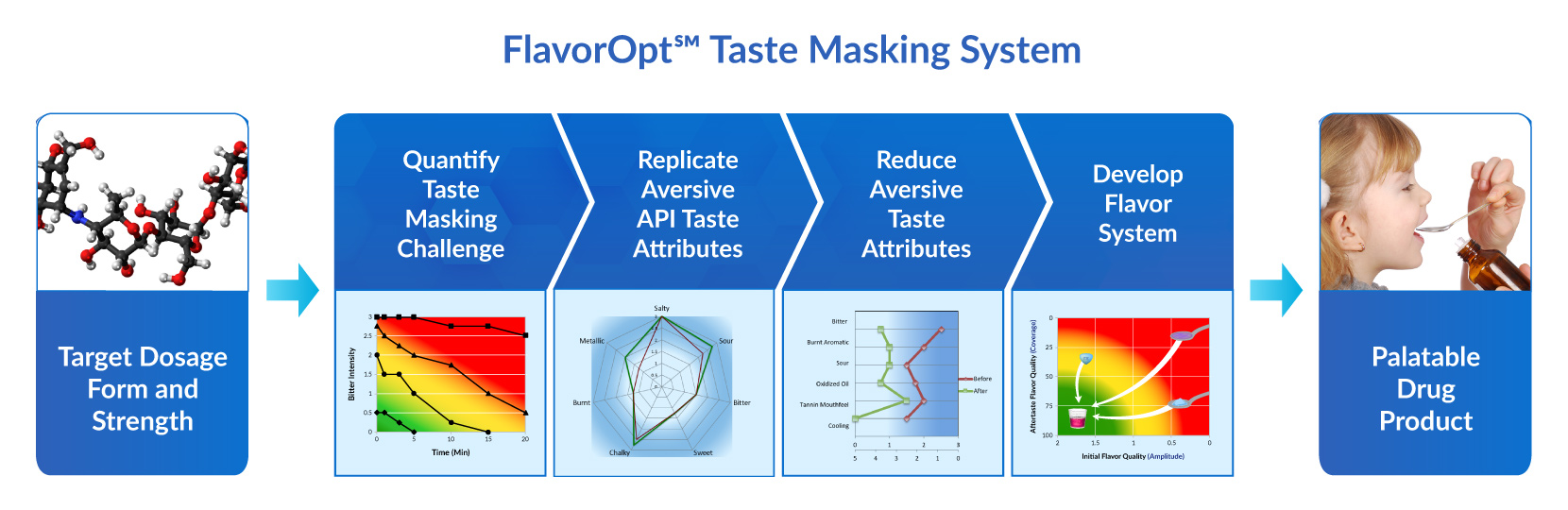
Senopsys seamlessly integrates formulation and sensory science to develop palatable, age-appropriate formulations.
Dosage Form Experience
Our formulation scientists have deep experience across a wide range of dosage forms, including:
Sensory Analysis Capabilities
Our sensory science team evaluates investigational and approved drug products using:
All Senopsys formulation scientists are also trained sensory analysts, enabling integrated data interpretation and more efficient formulation development.
Senopsys applies a proven sensory-directed formulation approach, combining rapid prototyping with evaluation by trained human panelists.
Formulation Capabilities
Supporting Infrastructure
Senopsys conducts taste assessment and taste masking studies in accordance with ICH Good Clinical Practice (GCP) standards.
Clinical Study Capabilities
Regulatory & Operational Infrastructure
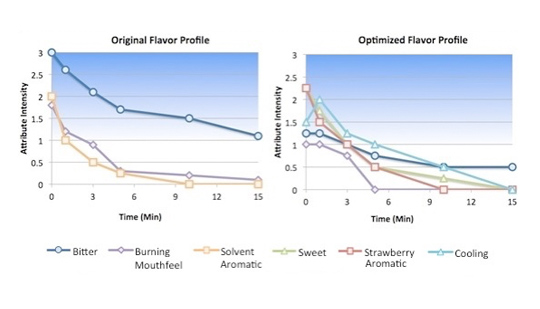
Oral sprays can deliver a wide range of APIs into systemic circulation through the highly perfused tissues of the oral cavity. Using a sensory-directed process, Senopsys developed a palatable oral spray formulation for an extremely bitter drug, despite the added challenge of a solvent system that produced trigeminal irritation.
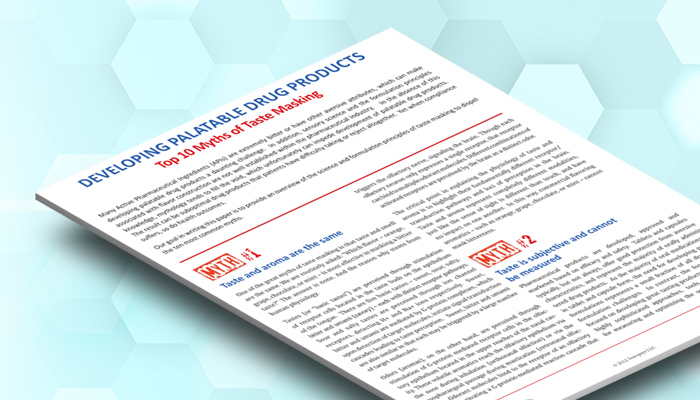
How good is your knowledge of taste masking? Learn the truths behind the science and what it means for your development program.
Many APIs can achieve meaningful palatability improvement through formulation (excipient) systems alone. However, challenging compounds may require more advanced “sequestration” technologies such as particle coating, complexation or encapsulation. Determining the appropriate path early can prevent unnecessary development cycles.
Yes. Sensory and formulation data can help support regulatory justification of excipient selection and usage levels during product development and regulatory review.
Trusted by 15 of the top 25 global pharma companies, Senopsys brings sensory science and formulation expertise to the most challenging taste masking problems.
Reach out to schedule a technical discussion with our experts.