

FDA Draws the Line Between “Candy and “Drug”
By: Jeff Worthington – Senopsys President and Founder
Balancing Palatability and Safety
The increasing use of flavored, chewable, and rapidly dissolving dosage forms has transformed the patient experience of taking medicines—particularly for pediatric and geriatric populations. At the same time, these innovations have raised an important regulatory question:
When does a medicine become “too much like candy”?
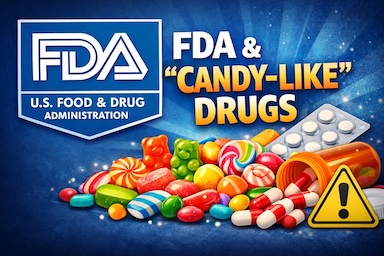
To explore this issue, the U.S. Food and Drug Administration convened a public workshop titled “Defining ‘Candy-Like’ Nonprescription Drug Products.” The meeting brought together regulators, industry, and academic experts to examine how product design—including taste, texture, appearance, and delivery format—may influence both patient acceptance and unintended misuse.
Workshop Objective
The primary objective of the workshop was not to establish new regulations, but to:
- Explore whether “candy-like” drug products can be meaningfully defined
- Identify the product attributes that contribute to this perception
- Understand the relationship between palatability and safety, particularly in pediatric populations
- Gather stakeholder input to inform potential future regulatory approaches
A central theme throughout the discussions was the inherent tension between improving adherence and minimizing risk. As medicines become more pleasant to take, they may also become more appealing—and potentially more accessible—to unintended users, especially young children.
Senopsys Contribution: The Science of Palatability
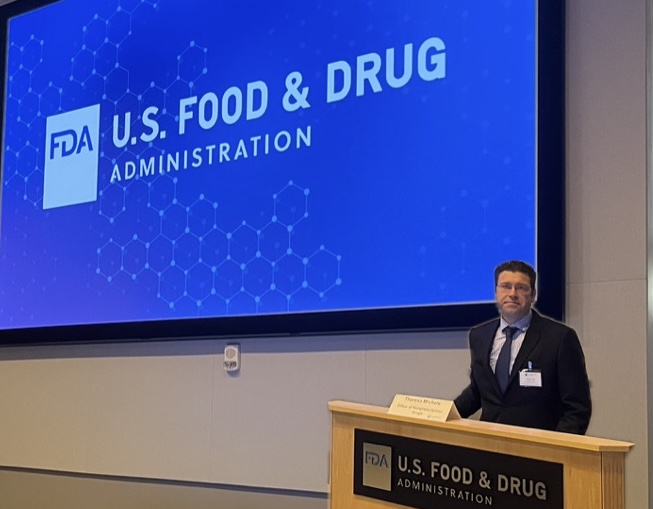
As outlined David’s presentation , palatability is not a single attribute, but a multi-sensory experience involving:
- Taste (sweet, bitter, sour, salty, umami)
- Aroma (orthonasal and retronasal perception)
- Mouthfeel and texture
- Chemesthetic effects (e.g., cooling, tingling, burn)
These attributes interact in complex ways to shape the patient’s perception of a product.
Importantly, Senopsys emphasized that most active pharmaceutical ingredients (APIs) inherently possess aversive sensory characteristics, particularly bitterness and irritation. The role of formulation is therefore not to create a confectionery experience, but to reduce these aversive attributes to acceptable levels.
Senopsys defines a palatable drug product as one in which:
“Aversive sensory attributes are reduced to near or below the recognition threshold.”
This distinction is critical. Palatability is not about making a drug taste like candy—it is about ensuring it can be taken as intended.
Key Scientific Insights
Senopsys’ analysis highlighted several important considerations:
- APIs are inherently challenging as many commonly used OTC actives exhibit:
- Strong bitterness
- Lingering aftertaste
- Irritative mouthfeel
These characteristics necessitate taste-masking strategies to enable patient compliance.
- Palatability is measurable using established sensory science methods, product attributes can be:
- Identified
- Quantified
- Optimized
These tools provide an objective framework for formulation decisions.
- Taste masking is not unlimited. While multiple approaches exist (e.g., flavor systems, encapsulation, chemical modification), each must be applied judiciously to avoid overcorrection toward a confectionery profile.
Senopsys Recommendations to FDA
As part of its contribution, Senopsys provided practical, science-based recommendations intended to support a balanced regulatory approach.
- Optimize—but do not maximize—palatability
- Sweeteners and flavor systems should be used only to the extent necessary to reduce aversive attributes
- Overly strong sweetness or flavor intensity should be avoided
- Avoid confectionery-like design cues
- Novel shapes, characters, and candy analogues (e.g., gummies resembling commercial candy forms) should be avoided
- Texture innovations should be limited to functional needs
- Maintain clear differentiation from candy
Senopsys recommended that FDA consider non-flavor factors that influence perception, including:
- Product appearance and form factor
- Color intensity (avoid highly vibrant, candy-like colors)
- Packaging and labeling
Examples of appropriate safeguards include:
- Unit-dose packaging
- Child-resistant closures
- Plain, non-confectionery visual design
A Balanced Path Forward
The workshop made clear that “candy-like” is not defined by any single attribute, but rather by a combination of sensory, visual, and contextual factors.
From a formulation perspective, the key challenge is not simply making medicines more palatable—it is doing so responsibly.
At Senopsys, we believe that: Effective taste masking should enable adherence without creating unintended appeal.
Achieving this balance requires:
- A rigorous understanding of sensory science
- Careful control of formulation variables
- Thoughtful integration of product design and safety considerations
Looking Ahead
The FDA workshop represents an important step in understanding how modern dosage forms are perceived and used. While no formal regulatory definition has yet been established, the discussions highlight a clear direction:
- Greater scrutiny of highly palatable dosage forms
- Increased emphasis on product differentiation from confectionery
- A growing role for science-based approaches to palatability
Senopsys is committed to supporting this evolution by applying sensory science to develop drug products that are both acceptable to patients and aligned with safety expectations.
Do You Have A Taste Masking Challenge?
Are you faced with the need to develop a palatable drug product to support clinical trials or commercial development? Our scientists are expert in both taste assessment and taste masking.
We use our experienced GCP-compliant taste panels and analytic tools to quantify the taste masking challenge and guide formulation development. And we apply a structured, sensory-directed development approach pioneered in the food industry to create palatable, taste-masked drug formulations for liquids, powders and solids.
Talk to our team about your specific formulation challenge.
Palatability should never be the reason a medicine fails.
About the Author
Jeff Worthington is President and Founder of Senopsys, established in 2006 to advance the development of palatable, patient-accepted medicines. With over three decades of experience, he advances approaches to taste masking that help ensure palatability does not become a barrier to clinical or commercial success.